Wrap up your year with fresh ideas and inspiration. Our NDDCEL Advisory Board members and Faculty Fellows share the books that have shaped their thinking as we look ahead to 2026.
 Dare to Lead
Guy Trerotola, Advisory Board
“Brene defines vulnerability as not a weakness, but the birthplace of innovation, creativity, and change, and that leaders must embrace it to build trust and connection. What resonates with me is that effective leadership requires identifying and living by core values, which guide decision-making and behavior, especially in difficult situations. She speaks about building a practical framework for building and maintaining trust within teams.”
 The Ministry For the Future
Mary Gentile, Advisory Board
“This sprawling and compelling novel shares a provocative and even encouraging vision of a world finally grappling with climate change. Robinson weaves financial, scientific, political and personal narrative into a rewarding and inspiring read.”
Bad Company: Private Equity and the Death of the American Dream
Brian Levey, Faculty Fellow
“The founding vision for the Mendoza College of Business suggests that the primary function of business is to serve the common good. Private equity, at least as portrayed in this book? Not so much.”
 The Measure
Edward Conlon, Advisory Board
“Nikki Erlick’s The Measure raises all kinds of ethical questions about what’s right, what’s moral and what’s fair, as a result of every human over 21 learning just how long they will live.”

The View from Ninety: Reflections on How to Live a Long, Contented Life
Dan Kerrigan, Advisory Board
“Charles Handy was on the path of becoming an accidental expat, working for an oil company in Asia. He had an expense account and a cushy role. He then decided complacency is career suicide, and he pivoted to focus on his true calling, consulting. This was my business book of the year.”
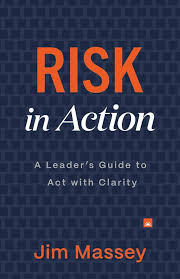
Risk in Action: A Leader’s Guide to Act with Clarity
Ellen M. Hunt, Advisory Board
“Building on his first book, Trust in Action that gave us the 'Can, Care, Do model,' Jim Massey breaks down the complexity of risk into the Face, Frame, Forward model so leaders can act with clarity when faced with uncertainty.”
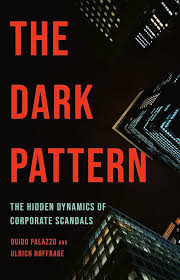
The Dark Pattern: The Hidden Dynamics of Corporate Scandals
Ellen M. Hunt, Advisory Board
“What truly makes this book unique is that not only do the authors show us the dark patterns that are at the heart of every scandal, they give us the bright patterns to proactively enhance corporate culture and avoid reputational damage and future scandals.”
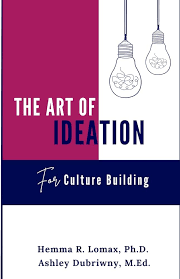
The Art of Ideation for Culture Building
Ellen M. Hunt, Advisory Board
“Culture isn’t just serving pizza in the break room. It takes constant care and attention. These authors explain the concepts of ideating, so you can develop the skill of generating your own bright ideas to build and sustain ethical cultures in organizations.”
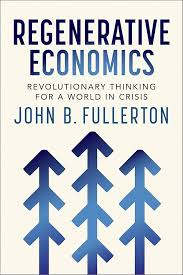 Regenerative Economics: Revolutionary Thinking for a World in Crisis
Drew Marcantonio, Faculty Fellow
From the publisher: Regenerative Economics is based on the deceptively simple idea that an economic system should emulate the process and patterns that define all life. This science-based next evolution of economics explains the root cause of the polycrisis and promises a hopeful pathway forward, rooted in unseen potential and abundance.
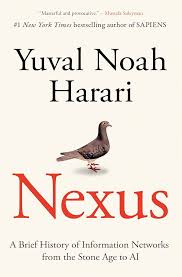
Nexus: A Brief History of Information Networks from the Stone Age to AI
Nick Berente, Faculty Fellow
“Harari's Nexus is a fun read that points out how critical information networks are to human cooperation - full of insights relevant to ethical leadership, particularly in this age of AI. Harari has a unique perspective and the book is a page-turner.”
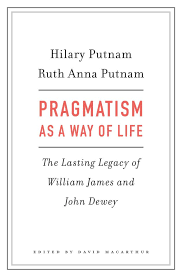 Pragmatism as a Way of Life: The Lasting Legacy of William James and John Dewey
Nick Berente, Faculty Fellow
“Putnam and Putnam discuss how Dewey and other pragmatists essentially equated ethics with epistemology. One can only have right action if they know something…”
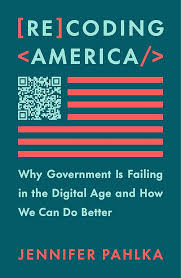 Recoding America: Why Government Is Failing in the Digital Age and How We Can Do Better
Cecelia Bolden, Advisory Board
"Jennifer Pahlka reveals how government systems often become trapped in outdated processes, rigid rules, and fragmented lines of accountability. She argues that many public-sector failures stem not from poor intentions but from institutional habits that elevate compliance over meaningful outcomes. This perspective is highly relevant to ethical leadership, understood as leadership grounded in clarity of purpose, responsiveness, and accountability to the people we serve. Pahlka’s call to redesign systems so they are transparent, human-centered, and effective aligns closely with the NDDCEL’s theme of values-based leadership—anchoring decisions in integrity, inclusion, sustainability, and responsible culture. Her insights reinforce the need to renew operational mindsets, restore trust in institutions through competent action, and recommit to serving the public in ways that deliver real and measurable value. I found the book especially useful because it reframes ethical leadership as not only a matter of values but of designing and stewarding systems that enable people to do ethical, effective work. It reinforces the idea that leaders must clear barriers, not simply set expectations—exactly the kind of systems-minded leadership emphasized at NDDCEL."

Set Boundaries, Find Peace: A Guide to Reclaiming Yourself
Monica Allgaier, Advisory Board
“Rooted in cognitive behavior therapy research, Set Boundaries, Find Peace focuses on living in alignment and clarifying intentions and boundaries with self and others, personally and professionally, so that we can live and lead from a place of empowerment, commitment, and compassion.”
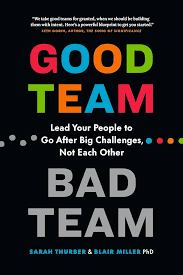
Good Team, Bad Team: Lead Your People to Go After Big Challenges, Not Each Other
Monica Allgaier, Advisory Board
“Also rooted in cognitive diversity and creative problem solving research, Good Team, Bad Team narrates the mindsets and skills present in leaders whom foster collaboration and focus on empathic and innovate teaming, paralleling the NDDCEL’s pursuit of ethics for improvement instilled in flourishing businesses and communities at the micro and macro “team” levels.”
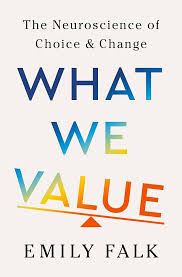
What We Value: The Neuroscience of Choice and Change
Christopher Adkins, Faculty Fellow
“Making choices that reflect our values is a timeless challenge. Neuroscientist Emily Falk offers a practical guide for understanding how our brains help or harm us in making decisions. Packed with science-backed strategies, this book harnesses our neural wiring to improve how we lead from values, navigate change, and elevate our teams.”

The Gales of November: The Untold Story of the Edmund Fitzgerald
Jessica McManus Warnell, Faculty Director
“Growing up in the Midwest near the Great Lakes (and with Gordon Lightfoot in heavy rotation when I was a kid), I was always intrigued by the story of the shipwreck. The book explores the tragedy and the legend - from the inspiration of the Edmund Fitzgerald’s dedicated crew to a portrait of how critical Great Lakes shipping has been to American industry. As the author noted in an interview, ‘This is where your stuff comes from, and at great risk.'"
More Recommendation Roundups:
FT and Schroders Business Books of the Year 2025, Financial Times
16 books that changed leaders in 2025, World Economic Forum
The Best Books of 2025, The Economist
82 books business leaders couldn't put down in 2025, Bloomberg
11 best leadership books of 2025, The Next Big Idea Club